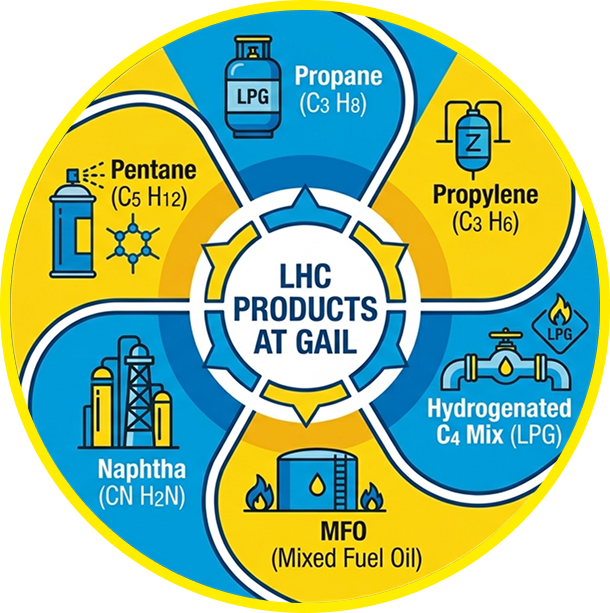
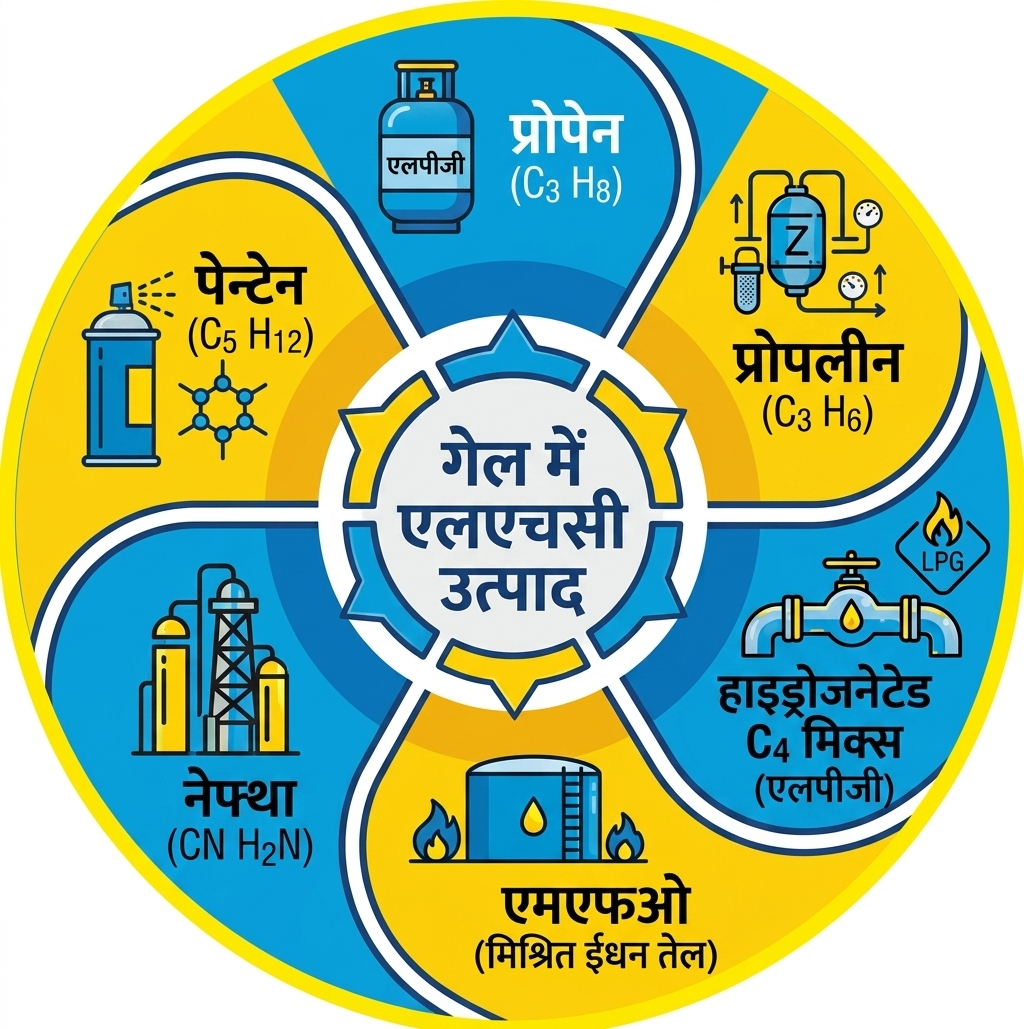
प्रोपेन गैस
प्रोपेन औद्योगिक, घरेलू, वाणिज्यिक और ऑटो क्षेत्र में ईंधन और रेफ्रिजरेंट के रूप में अपने विविध अनुप्रयोगों के कारण दुनिया भर में सबसे पसंदीदा ईंधन है। प्रोपेन एक पर्यावरण के अनुकूल ईंधन है जो प्रदूषण को कम करने और उत्पादकता बढ़ाने का एक प्रभावी तरीका प्रदान करता है। हमारे संरक्षक इसकी ग्राहक-अनुकूल विशेषताओं के कारण इसे "महान मूल्य का ईंधन" भी कहते हैं। प्रोपेन के कुछ महत्वपूर्ण लाभ इस प्रकार हैं:
प्रोपेन के विशिष्ट विनिर्देश:
| क्रम संख्या |
घटक |
इकाई |
विस्तृत जानकारी |
| 1 |
इथेन |
वॉल्यूम % |
रिपोर्ट के अनुसार |
| 2 |
प्रोपेन गैस |
वॉल्यूम % |
>95 % |
| 3 |
कुल ब्यूटेन |
वॉल्यूम % |
<= 4 % |
| 4 |
कुल पेंटेन |
वॉल्यूम % |
<= 0.20 % |
प्रोपेन के लाभ:
- एलपीजी की तुलना में उच्च कैलोरी मान
- बिना किसी अशुद्धियों के सजातीय मिश्रण
- बर्नर के बंद होने में कमी लाता है
- लो ड्यू प्वाइंटt
प्रोपेन के अनुप्रयोग:
- प्रक्रिया हीटिंग
- सुखाने वाले ओवन
- प्रक्रिया हीट ड्रायर
- पेंटिंग इकाइयाँ
- धातु उद्योग
- रेफ्रिजरेशन
गेल प्रोपेन को एक्स-प्रोडक्शन इकाइयों की आपूर्ति की जाती है। गेल के जोनल मार्केटिंग ऑफिस अहमदाबाद, बैंगलोर, भोपाल, चेन्नई, चंडीगढ़, हैदराबाद, जयपुर, कोलकाता, लखनऊ, मुंबई और नोएडा में स्थित हैं। प्रोपेन के विनिर्देशों और अनुप्रयोगों के बारे में अधिक जानकारी के लिए, क्षेत्रीय विपणन कार्यालयों से संपर्क किया जा सकता है।
पेंटेन
पेंटेन एक क्लास 'ए' नियंत्रित उत्पाद है और सॉल्वेंट कंट्रोल ऑर्डर 2000 के दायरे में आता है। पेंटेन का उत्पादन गैस प्रसंस्करण इकाइयों (जीपीयू) में अंशांकन के माध्यम से प्राकृतिक गैसोलीन तरल (एनजीएल) के प्रसंस्करण द्वारा किया जाता है। पेंटेन अत्यधिक अस्थिर उत्पाद होने के कारण आरवीपी लगभग 0.9 किग्रा/सेमी2 होने के कारण नाइट्रोजन ब्लैंकिंग, प्रेशराइज्ड स्टोरेज टैंक, निस्तारण और भंडारण के लिए वाष्प रिटर्न लाइन जैसी विशेष सुरक्षा व्यवस्था की आवश्यकता होती है। वायुमंडल में वाष्प से बचने के लिए पेंटेन को एक संलग्न प्रणाली में संभालने की आवश्यकता होती है जिसके परिणामस्वरूप हवा के साथ खतरनाक मिश्रण का निर्माण होता है।
पेंटेन की विशिष्ट विशिष्टताएँ:
| क्रम संख्या |
घटक |
इकाई |
विस्तृत जानकारी |
| 1 |
आई-पेंटेन |
डब्ल्यूटी % |
49 |
| 2 |
एन-पेंटेन |
डब्ल्यूटी % |
40 |
| 3 |
साइक्लो पेंटेन |
डब्ल्यूटी % |
1.84 |
| 4 |
कुल C5 |
डब्ल्यूटी % |
90 |
पेंटेन के लाभ:
- कम विषाक्तता
- अच्छा विलायक
- तेजी से वाष्पीकरण
- पर्यावरण के अनुकूल
पेंटेन के अनुप्रयोग:
- गैस क्रोमैटोग्राफ
- ब्लोइंग एजेंट
- रबर उद्योग
- एरोसोल प्रणोदक
- लैब अनुप्रयोग
- पेट्रोकेमिकल उद्योग में कूलिंग एजेंट
- सफाई और डीग्रिसिंग
पेंटेन के उपयोग:
पेंटेन को मुख्य रूप से आईएसओ, सामान्य और वाणिज्यिक पेंटेन में पुन: संसाधित किया जा रहा है, जिसका ईपीएस, पीयू और एलएबी के निर्माण के लिए ब्लोइंग एजेंट के रूप में उपयोग किया जाता है। पेंटेन का उपयोग भारी सॉल्वैंट्स के साथ सम्मिश्रण और मोटर वाहन और विमानन ईंधन में मिश्रण के रूप में भी किया जा सकता है। इसका क्लोरीनयुक्त पेंटेन और पेंटानॉल के उत्पादन, कृत्रिम बर्फ के निर्माण, कम तापमान वाले थर्मामीटर, विलायक निष्कर्षण प्रक्रियाओं और प्लास्टिक में ब्लोइंग एजेंट आदि के लिए कच्चे माल के रूप में भी उपयोग किया जाता है।
नफ्था
नेफ्था एक हल्का हाइड्रोकार्बन तरल है, जिसका उपयोग मुख्य रूप से बिजली, उर्वरक, स्टील और पेट्रोकेमिकल इकाइयों द्वारा किया जाता है। बिजली और इस्पात इकाइयों में इसका उपयोग ईंधन के रूप में किया जाता है, जबकि रासायनिक और उर्वरक इकाइयों में इसका उपयोग फीडस्टॉक के रूप में किया जाता है। नेफ्था का उपयोग पेट्रोकेमिकल (एथिलीन, प्रोपलीन और पायरोलिसिस गैसोलीन) का उत्पादन करने के लिए स्टीम क्रैकिंग के लिए एक रासायनिक फीडस्टॉक के रूप में किया जाता है और इसका उपयोग गैसोलीन सम्मिश्रण स्टॉक और बीटीएक्स निष्कर्षण के लिए उत्प्रेरक सुधार के लिए ईंधन इनपुट के रूप में किया जाता है। वर्तमान में, गेल बिजली, उर्वरक और पेट्रोकेमिकल क्षेत्रों में बड़ी मात्रा में संस्थागत ग्राहकों के लिए विशेष रूप से नेफ्था का विपणन कर रहा है।
नेफ्था के विशिष्ट विनिर्देश:
| क्रम संख्या |
घटक |
इकाई |
विस्तृत जानकारी |
| 1 |
आर्द्रता |
पीपीएम |
500 (अधिकतम) |
| 2 |
प्रारंभिक क्वथनांक |
°के आसपास |
30 (मिनट) |
| 3 |
अंतिम क्वथनांक |
°के आसपास |
160 (अधिकतम) |
| 4 |
घनत्व @ 15 °C |
ग्राम/सेमी³ |
0.66–0.75 |
नेफ्था के लाभ:
- पेट्रोकेमिकल्स के लिए फीडस्टॉक
- प्लास्टिक का निर्माण खंड
- तेजी से प्रज्वलन और उच्च ऊर्जा सामग्री
नेफ्था के अनुप्रयोग:
- रासायनिक उत्पादन
- गैसोलीन सम्मिश्रण
- रबर उद्योग
- कृषि क्षेत्र
- तेल और गैस का निष्कर्षण
- पेट्रोकेमिकल उद्योग
- ईंधन के रूप में
मिश्रित ईंधन तेल (एमएफओ)
एमएफओ क्लास 'ए' नियंत्रित उत्पाद है और सॉल्वेंट कंट्रोल ऑर्डर 2000 के दायरे में आता है। एमएफओ एक अनूठा एलएचसी उत्पाद है, जो जटिल क्रैकिंग प्रक्रिया के दौरान उत्पन्न विभिन्न धाराओं का मिश्रण है, जिसमें ढलान, वॉश ऑयल आदि का कभी-कभी मिश्रण शामिल है। एमएफओ का उत्पादन और विपणन गेल के एक्स-पाता प्लांट से किया जाता है।
एमएफओ के विशिष्ट विनिर्देश:
| क्रम संख्या |
घटक |
इकाई |
विस्तृत जानकारी |
| 1 |
आर्द्रता |
पीपीएम |
500 (अधिकतम) |
| 2 |
प्रारंभिक क्वथनांक |
°के आसपास |
30 (मिनट) |
| 3 |
अंतिम क्वथनांक |
°के आसपास |
260 (अधिकतम) |
| 4 |
घनत्व @ 15 °C |
जीएम/सेमी0 |
0.78 |
एमएफओ के लाभ:
- नियमित ईंधन का किफायती विकल्प
- औद्योगिक ताप में दक्षता को बढ़ावा देता है
एमएफओ के अनुप्रयोग:
- पेंट छिड़काव (धुंध छिड़काव)
- फर्नीचर पॉलिशिंग और रखरखाव
- बीटीएक्स निष्कर्षण इकाई के लिए फीडस्टॉक
- सड़क निर्माण सहित औद्योगिक ताप
- रासायनिक उद्योग में कच्चा माल
एमएफओ का उपयोग
- एमएफओ मुख्य रूप से हीटिंग, पेंट छिड़काव, फर्नीचर पॉलिशिंग या सुगंधित रिकवरी के लिए फीडस्टॉक के रूप में ईंधन के रूप में उपयोग किया जाता है।
हाइड्रोजनीकृत C4 मिक्स (LPG)
प्रोपेन के साथ मिश्रित हाइड्रोजनीकृत सी4 मिक्स (एलपीजी) एलपीजी है जो एक पर्यावरण के अनुकूल ईंधन है और प्रदूषण को कम करने और उत्पादकता बढ़ाने का एक विश्वसनीय और प्रभावी तरीका प्रदान करता है। इसका उपयोग इसके विविध अनुप्रयोगों के लिए रासायनिक/पेट्रोकेमिकल उद्योग में फीडस्टॉक के रूप में भी किया जाता है।
हाइड्रोजनीकृत C4 मिक्स (LPG) के विशिष्ट विनिर्देश:
| क्रम संख्या |
घटक |
इकाई |
विस्तृत जानकारी |
| 1 |
रीड वाष्प दबाव @ 37.8 °C |
किग्रा/सेमी2 |
3 - 8 |
| 2 |
कॉपर स्ट्रिप जंग @ 37.8 °C |
- |
नंबर 1 से भी बदतर नहीं |
| 3 |
सूखापन |
- |
सुखाना |
| 4 |
हाइड्रोजन सल्फाइड |
- |
पास |
| 5 |
कुल वाष्पशील सल्फर |
डब्ल्यूटी % |
<=0.015 |
| 6 |
1,3 ब्यूटाडीन |
मोल % |
<=2 |
| 7 |
सी5 और सी5+ सामग्री |
मोल % |
<=2.5 |
| 8 |
कैलोरी मान |
किलो कैलोरी/किग्रा |
11500-11600 |
हाइड्रोजनीकृत C4 मिक्स (LPG) के लाभ:
- स्वच्छ ईंधन
- दूषण की कम संभावना
हाइड्रोजनीकृत C4 मिक्स (LPG) के अनुप्रयोग:
- एलपीजी बनाना
- रासायनिक और पेट्रोकेमिकल उद्योग के लिए कच्चा माल
हाइड्रोजनीकृत C4 मिक्स (LPG) के उपयोग:
- हाइड्रोजनीकृत सी4 मिक्स (एलपीजी) का उपयोग मुख्य रूप से वाणिज्यिक/औद्योगिक क्षेत्रों में ईंधन के रूप में किया जा रहा है, और पेट्रोकेमिकल उद्योग में फीड स्टॉक के रूप में भी किया जा रहा है।.
प्रोपलीन पीसी-II
यह एक अनसेचुरेटेड कार्बनिक यौगिक है जिसका उपयोग विभिन्न औद्योगिक अनुप्रयोगों के लिए रासायनिक, फार्मा, उर्वरक और पेट्रोकेमिकल उद्योगों द्वारा किया जाता है। गेल उत्तर प्रदेश में पाता संयंत्र से पॉलिमर ग्रेड प्रोपलीन का उत्पादन और विपणन कर रहा है।
प्रोपलीन पीसी-II के विशिष्ट विनिर्देश:
| क्रम संख्या |
घटक |
इकाई |
विस्तृत जानकारी |
| 1 |
प्रोपलीन |
मोल % |
>=99.6430 |
| 2 |
प्रोपेन गैस |
मोल % |
<=0.3460 |
| 3 |
मीथेन |
पीपीएम |
<=10 |
| 4 |
इथेन |
पीपीएम |
<=100 |
| 5 |
एथिलीन |
पीपीएम |
<=100 |
| 6 |
मिथाइलसिटिलीन |
पीपीएम |
<=1 |
| 7 |
प्रोपेडीन |
पीपीएम |
<=2 |
| 8 |
1, 3 ब्यूटाडीन |
पीपीएम |
<=2 |
प्रोपलीन के लाभ :
- कम लागत
- कम विषाक्तता
- अन्य सामग्रियों के साथ संगतता
प्रोपलीन के अनुप्रयोग:
- पॉलिमर उत्पादन
- कृषि उत्पाद
- फार्मा और विशेष रसायन
- रेफ्रिजरेंट
संयंत्रों के स्थान का विवरण:
- (क) औरैय्या जिला में पाता (उ.प्र.) – प्लांट की लोकेशन दिल्ली-कानपुर रेलवे लाइन पर है और कानपुर से करीब 90 किलोमीटर पहले है। दिल्ली से दूरी लगभग 350 किलोमीटर है और यह संयंत्र उत्तर प्रदेश, झारखंड, हरियाणा, पंजाब, हिमाचल प्रदेश, उत्तराखंड, पश्चिम बंगाल और बिहार के उत्तरी राज्यों को आपूर्ति के लिए आदर्श रूप से स्थित है।
- (ख) गुना जिले में विजयपुर (मध्य प्रदेश) – यह संयंत्र भोपाल से लगभग 190 किलोमीटर और इंदौर से 260 किलोमीटर की दूरी पर स्थित है। यह संयंत्र गुजरात, महाराष्ट्र, राजस्थान, छत्तीसगढ़, मध्य प्रदेश, ओडिशा और दक्षिणी राज्यों को आपूर्ति के लिए आदर्श रूप से स्थित है।
- (ग) भरूच जिला में गांधार (गुजरात) - संयंत्र का स्थान वडोदरा से लगभग 70 किलोमीटर दूर गुजरात के भरूच जिले के रोज़ातनकारिया गांव में है। यह संयंत्र उत्तर प्रदेश, झारखंड, हरियाणा, पंजाब, हिमाचल प्रदेश, उत्तराखंड, पश्चिम बंगाल, महाराष्ट्र, राजस्थान, छत्तीसगढ़, मध्य प्रदेश, ओडिशा, बिहार के साथ-साथ दक्षिणी राज्यों के उत्तरी, मध्य और पूर्वी राज्यों में आपूर्ति के लिए आदर्श रूप से स्थित है।
- (घ) वडोदरा जिला में वाघोडिया (गुजरात) - संयंत्र का स्थान वडोदरा जिले के वाघोडिया तालुका के जीआईडीसी औद्योगिक एस्टेट में है, जो वडोदरा से लगभग 25 किलोमीटर दूर है। यह संयंत्र उत्तर प्रदेश, झारखंड, हरियाणा, पंजाब, हिमाचल प्रदेश, उत्तराखंड, पश्चिम बंगाल, महाराष्ट्र, राजस्थान, छत्तीसगढ़, मध्य प्रदेश, ओडिशा, बिहार के साथ-साथ दक्षिणी राज्यों के उत्तरी, मध्य और पूर्वी राज्यों में आपूर्ति के लिए आदर्श रूप से स्थित है।